
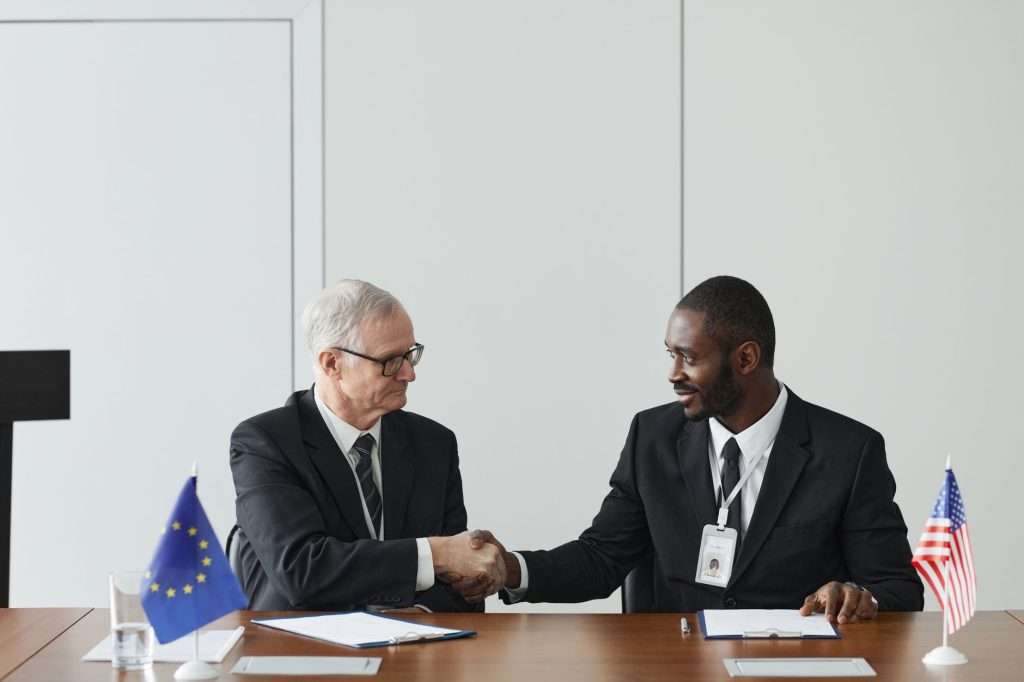
U.S. President Donald Trump's electoral setback in the midterm polls has created political incentives that make a long-awaited U.S.-India trade deal likely by the end of the year, directly affecting policymakers, exporters, and investors in both nations.
What changed?
U.S. President Donald Trump is facing intense political pressure over living costs following midterm poll results that handed control of both congressional houses to the Democrats.
Voter concern over the financial impact of import duties has made tariffs a political liability for the current administration, according to analysis from the Hoover Institution reported by CNBC. Tax Foundation estimates indicate that federal duties raised average household tax burdens by $820 in 2026 and $1,000 in 2025. Facing legislative challenges to his signature trade policies, the president is looking for policy achievements to promote to the American public. Experts suggest that a finalized pact with New Delhi serves as a prime candidate for a standalone announcement.
Who is affected?
Indian Prime Minister Narendra Modi and American trade officials are directly involved in final preparations for an agreement slated for the G20 leaders meeting in December.
Negotiations have largely concluded according to Indian media reports confirmed by Commerce Minister Piyush Goyal, positioning both governments to formalize terms at Mar-a-Lago. Foreign investors who recently returned to Indian markets in November stand to benefit from reduced trade uncertainty. Meanwhile, U.S. households dealing with high living costs remain central to the political calculus driving the acceleration of pending international agreements.
What does it mean for readers?
Readers evaluating market opportunities face a strategic decision regarding whether to position capital in Indian equities as global investors navigate broader economic shifts.
Analysis: Comparing key economic metrics across recent reports highlights how macroeconomic pressures differ between the two negotiating nations. While U.S. voters grappled with affordability concerns tied to import levies, India experienced a return of foreign capital alongside massive potential inflows tied to artificial intelligence market hedges.
| Metric / Factor | United States Context | India Context |
|---|---|---|
| Primary Pressure | Rising cost of living and tariff backlash | Energy prices and foreign investor exodus |
| Political Milestone | Midterm election shifts in Congress | Pending December G20 leaders meeting |
| Market Opportunity | Bipartisan trade deal announcements | Potential $115 billion in JPMorgan-projected inflows |
Story Timeline: Trump, Xi & Putin Diplomatic Summits
Track this developing story from beginning to end across all published reports in our newsroom coverage tree below.
U.S. midterm results and rising cost-of-living concerns are driving expectations for a finalized U.S.-India trade deal by year end.
Kai Trump reveals Tiger Woods is a great mentor who helps her with golf. The couple confirmed their relationship in March 2025 according to recent reports.
Explore the implications of a potential Trump Kim meeting in China. Discover how this summit could shape regional security and international policy.
Discover how Trump Xi and Putin meetings shape international trade and security rules, exploring whether major diplomatic summits yield real policy shifts.
Discover why Trump Xi and Putin meet in China for the APEC summit. Explore key updates on global trade, tech security rules, and market impacts.
Discover why Putin supports upcoming trilateral talks with US and Chinese leaders, and learn what this means for global trade and politics.
What is still unknown?
Official confirmation from government agencies remains absent as key ministries have yet to issue formal statements regarding the exact text of the upcoming agreement.
India's commerce and external affairs ministries, alongside the U.S. Trade Representative's Office, did not respond to requests for comment from CNBC. Although experts note a gentlemen's agreement exists between Trump and Modi, the final preferential tariff structures and specific sector concessions will not be fully verified until the leaders meet in December.
Frequently asked questions
When will the U.S.-India trade deal be signed?
The trade agreement is expected to be finalized when U.S. President Donald Trump and Indian Prime Minister Narendra Modi meet in December for the G20 leaders meeting.
Why are midterm election results impacting the trade talks?
Midterm election results highlighted voter concerns over living costs, pushing the administration to seek standalone trade achievements that bypass congressional hurdles.
What are the economic projections for Indian markets?
Indian stocks could attract up to $115 billion in foreign capital inflows if global investors choose to neutralize their current underweight market positions.
What impact will this Markets & Economy development have over the next 12 months?
Reader poll (non-scientific). Share your perspective below or join the discussion in the comments.