
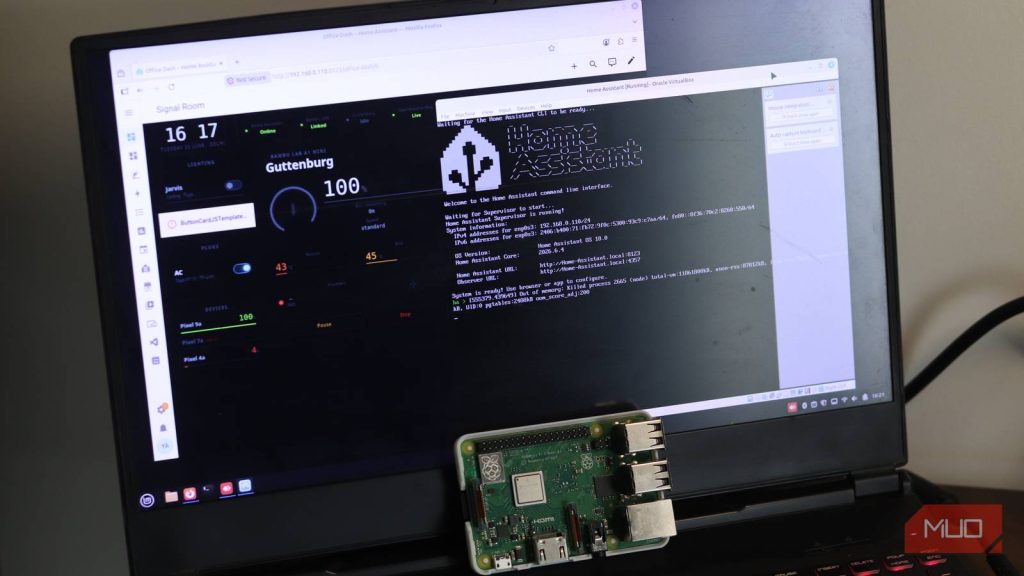
Using Home Assistant automations is often seen as the best way to run a smart home, but repeating voice commands gets old fast. Instead of asking a speaker to turn off lights or adjust the AC, building smart routines makes your house react on its own. A true smart home should know what to do without waiting for spoken cues or endless manual taps.
Why Use Home Assistant Automations Over Voice?
Voice control sounds easy until you realize how often you repeat simple phrases every single day. By moving decisions into background rules, you save time and cut out daily friction. For example, when your phone leaves home Wi-Fi and GPS confirms you are gone, your hub can shut off plugs and manage climate settings quietly.
Lighting is another great task to take away from voice prompts. An automation can turn ambient lights on at sunset and off at sunrise without any conversation needed. Since these routines trigger naturally based on the sun, you never have to adjust time settings as the seasons change throughout the year.

How Do NFC Tags Improve Daily Routines?
Placing an NFC tag on a bedside phone charger lets you trigger a bedtime routine with a single quick tap. This action turns off all bedroom lights and arms your climate control system without relying on a voice assistant or complex menus. It gives you intentional control while keeping things quiet and fast.
These tags also work even if certain smart devices go offline temporarily. If your air conditioner is unplugged, tapping the tag still controls every other online device linked to that specific rule. You get a reliable setup that removes repetitive tasks without needing a phone open in your hand.
What Are the Hidden Risks of Smart Home Rules?
Moving away from active control has one major downside because failures can hide easily in the background. If you tell a speaker to turn off a light, you know right away if something is wrong. In contrast, background rules can fail silently if your hardware drops offline or loses network connectivity.
A simple fix is to have your system monitor all entities and send a phone alert when an important device goes offline. You can read more about smart home configurations on Modween for additional setup tips. Setting up these checks ensures you catch broken links before they turn into frustrating surprises.
Renaming devices in the user interface can also break downstream scripts if you accidentally update internal entity IDs. To prevent this, keep your entity names fixed and handle cosmetic changes in the dashboard layer instead. You can check your system health using MakeUseOf guides to audit orphaned entities.
How Can You Fix Broken Entity IDs?
Home Assistant lets you set multiple names, but changing an entity ID in the UI can orphan your YAML scripts and templates. The best approach is to establish a strict naming format during device pairing and never change it later. Use areas and labels so you can swap out hardware in seconds without breaking your logic.
Building a resilient setup means treating your entity IDs like permanent software variables rather than simple cosmetic labels. Lock down your naming schema and let your smart home run quietly in the background. Visit Modween to explore more ways to optimize your local smart home server today.
Frequently Asked Questions
Why did my Home Assistant automations stop working?
They often break because a device was renamed in the UI, which updates internal entity IDs and orphans your YAML scripts and templates. You can read details on XDA Developers regarding proper naming schemes.
How do NFC tags help with smart routines?
NFC tags let you trigger actions like bedtime lighting or climate changes with a single tap on your phone, removing the need for voice commands.
What is the risk of background smart rules?
Background rules can fail silently if network devices drop offline without sending an explicit warning alert to your phone.
For in-depth context, see Why You Should Think Twice Before Using a MacBook Webcam Cover. For in-depth context, see Artificial Intelligence Deep Dives.
Frequently Asked Questions
Why Use Home Assistant Automations Over Voice?
Voice control sounds easy until you realize how often you repeat simple phrases every single day. By moving decisions into background rules, you save time and cut out daily friction. For example, when your phone leaves home Wi-Fi and GPS confirms you are gone, your hub can shut off plugs and manage
How Do NFC Tags Improve Daily Routines?
Placing an NFC tag on a bedside phone charger lets you trigger a bedtime routine with a single quick tap. This action turns off all bedroom lights and arms your climate control system without relying on a voice assistant or complex menus. It gives you intentional control while keeping things quiet a
What Are the Hidden Risks of Smart Home Rules?
Moving away from active control has one major downside because failures can hide easily in the background. If you tell a speaker to turn off a light, you know right away if something is wrong. In contrast, background rules can fail silently if your hardware drops offline or loses network connectivit
How Can You Fix Broken Entity IDs?
Home Assistant lets you set multiple names, but changing an entity ID in the UI can orphan your YAML scripts and templates. The best approach is to establish a strict naming format during device pairing and never change it later. Use areas and labels so you can swap out hardware in seconds without b
Frequently Asked Questions
Why did my Home Assistant automations stop working?
They often break because a device was renamed in the UI, which updates internal entity IDs and orphans your YAML scripts and templates. You can read details on XDA Developers regarding proper naming schemes.
What impact will this Digital Trends development have over the next 12 months?
Reader poll (non-scientific). Share your perspective below or join the discussion in the comments.