
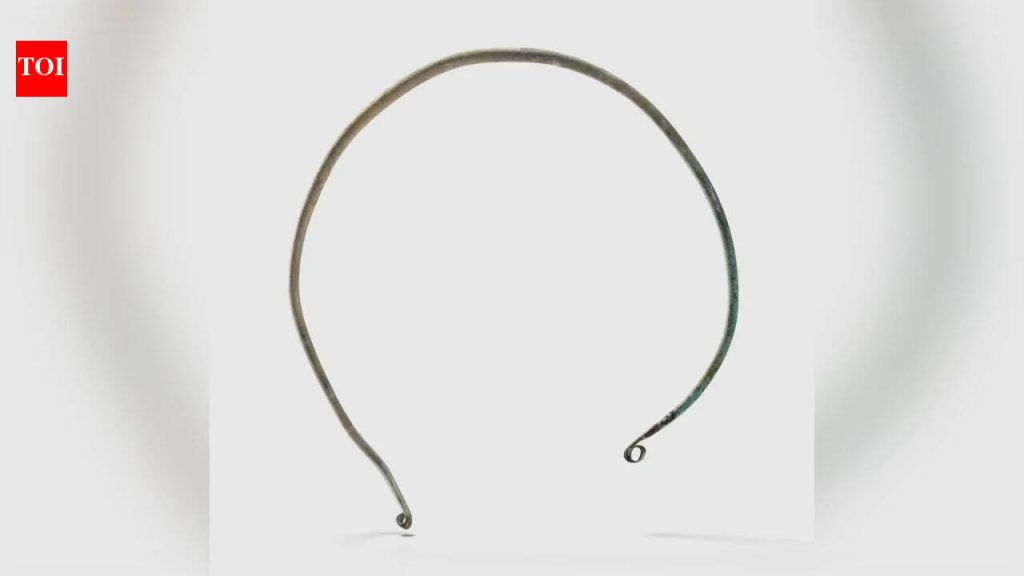
A 4000-year-old bronze neck ring emerged from the melting ice at the Lötschen Pass in the Swiss Alps, providing new evidence of ancient travel. Researchers from the Times of India confirmed this historic discovery in November 2026. As glaciers continue to recede, high-altitude sites reveal precious artifacts that reshape our view of human history.

Archaeologists from the Canton of Bern discovered the ornament during a routine field survey. This find highlights how shifting weather patterns across the globe expose long-hidden secrets. You can learn more about environmental shifts by checking our recent analysis on climate history impact. Scientists must act quickly to document these fragile items before exposure destroys them completely.
How Was the 4000-Year-Old Bronze Neck Ring Found?
Staff from the Archaeological Service of the Canton of Bern spotted the piece during a standard inspection round in mid-October. The team found the object lying in an area where ice has significantly receded. It measures 13 centimeters in diameter and dates to the Early Bronze Age between 2000 and 1700 BCE.
The team carefully documented the find before bringing it to a laboratory in Bern for proper preservation. While the pass has previously yielded organic items like leather and wooden arrows, this ring is unique. It represents the first piece of metal jewelry ever recovered from this specific mountain pass.
Why Did Ancient People Leave Jewelry at the Pass?
Experts believe the 4000-year-old bronze neck ring was an intentional gift rather than a lost item. They suggest it functioned as a ritual offering to a deity for safe passage. Similar items appear in graves throughout the region, connecting this high-mountain find to broader cultural practices of that era.
By leaving such valuable goods, travelers likely sought divine protection for their journey across the rugged peaks. This discovery confirms that humans have navigated these high Alpine routes for millennia. Understanding these ancient movements provides context for how early trade paths evolved, a topic we cover in our guide on ancient trade routes.
What Does the Discovery Tell Us About History?
The neck ring proves that ancient societies moved across difficult landscapes with frequency and clear intent. It bridges the gap between different regions where researchers have found similar jewelry in burials. Consequently, the pass served as a vital connector for people during the Bronze Age.
As the ice continues to melt, experts expect more discoveries to emerge from the freezing mountains. Each item helps scientists refine the timeline of human migration and social rituals. This singular bronze piece serves as a physical link to a world that remains largely buried under snow and ice.
Frequently Asked Questions
When was the 4000-year-old bronze neck ring discovered?
Archaeologists from the Canton of Bern found the artifact during a field inspection in mid-October 2026, and officials announced the discovery on November 18.
Where exactly did researchers find the bronze ring?
The team recovered the ring at the Lötschen Pass, situated over 2,600 meters above sea level on the border between the Bernese Oberland and Valais.
Why do experts think the artifact was left behind?
Researchers suspect the ring was an intentional offering to a deity, a plea for a safe journey, or a gesture of thanks for a successful trip.
For in-depth context, see This Seven-Year-Old $250 GPU Is Still a Better Buy Than a $949 Steam Deck. For in-depth context, see Artificial Intelligence Deep Dives.
Frequently Asked Questions
How Was the 4000-Year-Old Bronze Neck Ring Found?
Staff from the Archaeological Service of the Canton of Bern spotted the piece during a standard inspection round in mid-October. The team found the object lying in an area where ice has significantly receded. It measures 13 centimeters in diameter and dates to the Early Bronze Age between 2000 and 1
Why Did Ancient People Leave Jewelry at the Pass?
Experts believe the 4000-year-old bronze neck ring was an intentional gift rather than a lost item. They suggest it functioned as a ritual offering to a deity for safe passage. Similar items appear in graves throughout the region, connecting this high-mountain find to broader cultural practices of
What Does the Discovery Tell Us About History?
The neck ring proves that ancient societies moved across difficult landscapes with frequency and clear intent. It bridges the gap between different regions where researchers have found similar jewelry in burials. Consequently, the pass served as a vital connector for people during the Bronze Age. A
Frequently Asked QuestionsWhen was the 4000-year-old bronze neck ring discovered?
Archaeologists from the Canton of Bern found the artifact during a field inspection in mid-October 2026, and officials announced the discovery on November 18.
Where exactly did researchers find the bronze ring?
The team recovered the ring at the Lötschen Pass, situated over 2,600 meters above sea level on the border between the Bernese Oberland and Valais.
What impact will this Digital Trends development have over the next 12 months?
Reader poll (non-scientific). Share your perspective below or join the discussion in the comments.