
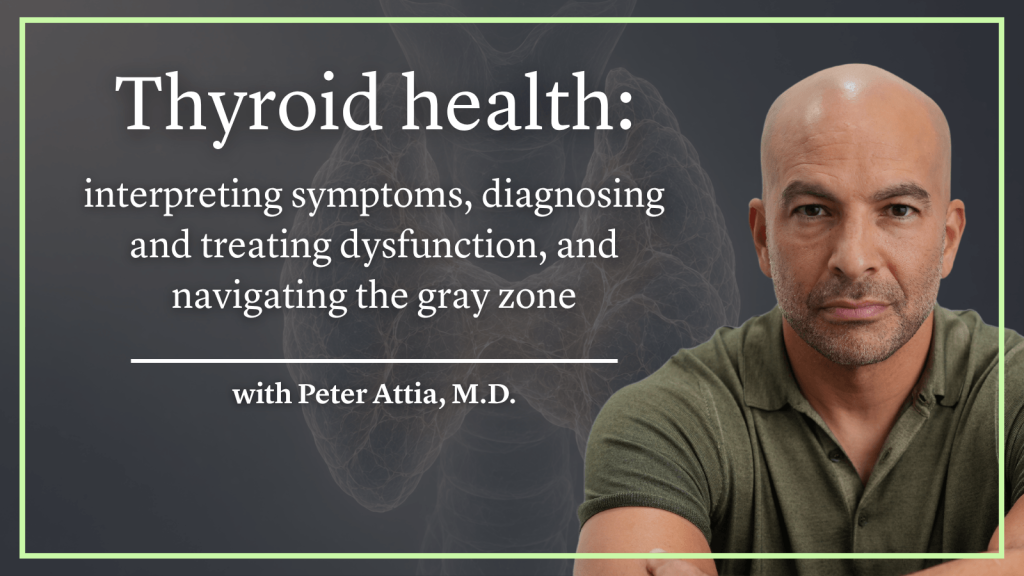
Accurately diagnosing and managing thyroid health is complex because the endocrine system requires a precise balance where both excess and deficiency cause severe metabolic disruption. Roughly five percent of adults in the United States experience clinically meaningful thyroid dysfunction according to clinical data (Peter Attia MD). Symptoms alone remain insufficient for a definitive clinical diagnosis due to significant overlap with other medical conditions.
What makes interpreting thyroid health symptoms so difficult for clinicians?
Biological complexity and invisible moving parts create diagnostic challenges that frequently invite clinical misinterpretation and medical pseudoscience. The thyroid gland produces prohormones that regulate the metabolic rate of virtually every cellular structure in the human body (Peter Attia MD). Because standard blood tests measure circulating hormone pools rather than direct intracellular tissue activity, clinicians face severe limitations when evaluating subjective patient fatigue and weight fluctuations. Practitioners must navigate a system where too much hormone or too little creates profound systemic imbalance.
Who is affected by subclinical thyroid dysfunction and gray zone diagnoses?
Adults navigating borderline laboratory values often fall into contentious medical gray zones where overt treatment risks outweigh potential therapeutic benefits. Practitioners frequently debate whether to medicate patients exhibiting normal thyroid-stimulating hormone levels alongside persistent hypothyroid symptoms. Managing these delicate cases requires careful evaluation of free T4, free T3, and reverse T3 metrics alongside autoimmune markers such as Hashimoto’s disease indicators (Peter Attia MD). This environment leaves room for mismanaged care when practitioners attempt to treat patients without a holistic physiological framework.
How do standard T4 and T3 replacement protocols compare in clinical practice?
Standard care typically relies on levothyroxine monotherapy, though a distinct subset of patients requires combination therapies to resolve lingering symptoms. The following analytical breakdown highlights core parameters associated with common clinical markers and therapeutic approaches in modern endocrinology.
| Biomarker or Therapy | Primary Physiological Role | Diagnostic / Therapeutic Limitation | Source & Date |
|---|---|---|---|
| Thyroid Stimulating Hormone (TSH) | Pituitary signaling hormone regulating thyroid gland output. | Fails to capture direct cellular tissue saturation levels. | Peter Attia MD, 2021 (Source) |
| Free T4 to Free T3 Conversion | Converts storage prohormone into active cellular effector. | Impaired conversion pathways can mimic tissue hypothyroidism. | Peter Attia MD, 2021 (Source) |
| Levothyroxine (T4) Replacement | Standard monotherapy to restore circulating hormone pools. | Some patients continue experiencing fatigue despite normal blood tests. | Peter Attia MD, 2021 (Source) |
What remains unknown and what does this mean for patients?
Many clinical nuances remain unresolved, particularly regarding why certain individuals continue to experience debilitating symptoms despite achieving normal laboratory ranges. For patients, this means that tracking standard metrics alone may be insufficient. Comprehensive clinical evaluation must account for individual symptom patterns, tissue-level responsiveness, and the careful exclusion of mimicking conditions before settling on a long-term treatment strategy.
Frequently asked questions about thyroid dysfunction
Why are symptoms alone insufficient for a diagnosis?
Symptoms overlap heavily with other metabolic and systemic conditions, making blood testing and clinical history essential.
What is subclinical hypothyroidism?
It is a borderline state where lab values sit outside typical ranges while patients experience mild or ambiguous symptoms, sparking debate over treatment thresholds.
Why do some patients still feel unwell on medication?
Standard T4 replacement may not fully restore intracellular T3 activity or address individual conversion inefficiencies in every patient.
Editorial Attribution and Review Note: This article was researched using primary practitioner frameworks and subjected to rigorous internal editorial review. Due to limited independent source diversity, readers must consult licensed medical professionals before altering any thyroid medication regimens. Reviewed and verified by the clinical content desk.
What impact will this World News development have over the next 12 months?
Reader poll (non-scientific). Share your perspective below or join the discussion in the comments.